Event Spotlight: Who’s Hosting Big Right Now
In today’s competitive sports tourism environment, winning a bid increasingly requires more than venue availability and hotel capacity. Rights holders are placing greater emphasis on alignment: alignment between event mission and destination identity, between community culture and athlete experience and between operational capability and long-term impact.
While infrastructure remains foundational, industry observers note a broader evolution: destinations that articulate who they are, and demonstrate how that identity enhances the event, are distinguishing themselves in crowded bid fields.
Three destinations illustrate how this shift is playing out across very different tiers of sport:
- Greensboro, North Carolina, host of the 2026 Lewis–Bethel Invitational
- Buffalo, New York, host of the NHL Draft
- Tucson, Arizona, host of ASANA in partnership with Tucson Inferno Pride
Each represents a different event scale and audience. Yet all three reflect a common strategic principle: identity is not supplemental to the bid, it is central to it.
A Tournament Town with Deep Women’s Sports Roots
Greensboro has long carried the moniker “Tournament Town,” a reference to its sustained history of hosting collegiate championships and major competitions. The Greensboro Coliseum, in particular, is widely associated with women’s basketball, having hosted more ACC Women’s Basketball championships than any other venue and serving as the spiritual home of the ACC Women’s Basketball Tournament.
The city is also home to UNCG and Bennett College. Bennett’s Bennett Belles played a documented role in the Civil Rights Movement, contributing to Greensboro’s broader legacy of women’s leadership and activism. That historical throughline — from civil rights to contemporary leadership — continues to shape the city’s civic identity.
Greensboro’s alignment with women-centered initiatives extends beyond athletics. The Women’s Only 5K supporting breast cancer advocacy, a high concentration of women-owned businesses, and the retail presence along Elm Street reinforce an ecosystem that elevates women’s participation and entrepreneurship.
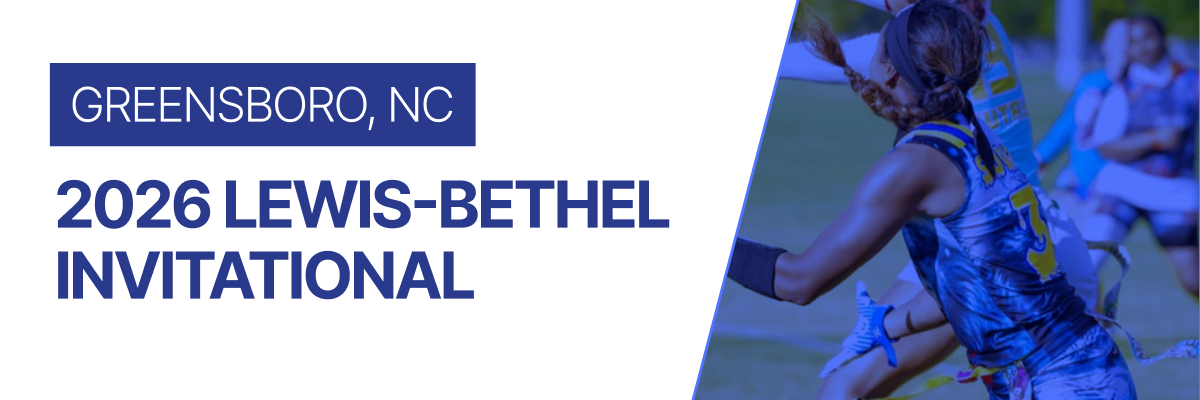
Against that backdrop, Greensboro was awarded the 2026 Lewis–Bethel Invitational.
"Our team in Greensboro, North Carolina is proud to be the home of the 2026 Lewis-Bethel Invitational. We are grateful to Mashonda and her network for their trust, and we look forward to a partnership that leaves a meaningful, lasting impact for both the traveling athletes and the entire Greensboro community." -Caleb
Why Greensboro Is Winning
From a competitive bidding perspective, Greensboro’s strength lies in congruence. The mission of a women’s event finds authentic resonance in a city that has repeatedly demonstrated leadership in hosting women’s championships.
Rather than positioning itself as simply “available,” Greensboro offers narrative alignment:
- A venue synonymous with women’s collegiate competition
- Institutions with histories of women’s advocacy
- A civic culture that foregrounds women-owned businesses and leadership
- A downtown retail environment conducive to athlete and visitor engagement
This layered identity likely strengthens bid positioning by reducing perceived risk for rights holders. When event themes mirror destination values, activation becomes more organic, and stakeholder buy-in becomes easier to mobilize.
Activation Beyond the Venue
Greensboro’s competitive advantage extends beyond the arena footprint. The city’s concentration of women-owned businesses presents partnership and storytelling opportunities that can enhance athlete and attendee experience. Elm Street boutiques provide a walkable retail corridor that supports visitor dwell time.
Additionally, the city’s history — particularly Bennett College’s Civil Rights legacy — creates opportunities for educational programming, community engagement initiatives, or athlete storytelling activations that deepen the event’s resonance beyond competition. Such activation strategies are increasingly relevant in women’s sports tourism, where community integration often plays a central role in event experience design.
What Other Cities Can Learn
Greensboro demonstrates that historical credibility matters. Cities cannot fabricate decades of women’s sports hosting, but they can inventory authentic assets that align with event missions.
Key lessons include:
- Lead with identity, not just infrastructure.
- Demonstrate historical continuity, not one-off support.
- Build activation pathways through existing community strengths.
For destinations seeking to attract women-centered events, Greensboro offers a template: align event purpose with civic character, and operational capacity becomes part of a larger narrative.

A Hockey City on a National Stage
Buffalo’s selection as host of the NHL Draft signals more than logistical competence. As home of the Buffalo Sabres, the city possesses deep hockey culture and a generational fan base.
Professional league events such as the NHL Draft require ecosystem readiness: broadcast infrastructure, security coordination, municipal support, hotel inventory, sponsor staging capacity, and integrated transportation planning. They also demand an atmosphere that translates well on national and international media platforms.
Buffalo’s downtown footprint supports citywide activation, allowing fan festivals, sponsor activations, hospitality programming, and media staging to extend beyond a single venue.
What Hosting Signals
Hosting a major pro league event communicates credibility. It signals that a destination can manage:
- High-security requirements
- Global media operations
- Sponsor expectations at national scale
- Complex municipal coordination
While infrastructure is foundational, authenticity plays a decisive role. Buffalo is not attempting to “become” a hockey city for a weekend — it already is one.
In competitive bidding, that authenticity reduces friction. Rights holders can trust that attendance, energy, and local engagement will materialize organically rather than requiring artificial stimulation.
Activation Beyond the Arena
The NHL Draft is not simply a stage event; it is a content engine. Buffalo’s ability to activate across downtown — with fan zones, hospitality environments, sponsor activations, and media programming — transforms the event into a multi-day citywide experience.
Collaboration between the team, venue, DMO, and city leadership is central. Professional league events often hinge on unified civic execution. Buffalo’s established hockey ecosystem provides natural alignment among stakeholders.
The city’s walkable downtown core supports visitor mobility between activations, enhancing sponsor exposure and extending economic impact beyond the primary venue.
Why Buffalo Is Winning
Buffalo’s bid strength likely stems from three intersecting factors:
- Cultural authenticity — a deep hockey identity
- Operational readiness — infrastructure capable of national broadcast standards
- Coordinated leadership — collaboration among team, DMO, and municipal partners
For pro leagues, reputation risk is significant. Selecting a host with proven sports culture reduces uncertainty.
What Other Cities Can Learn
Not every destination can replicate Buffalo’s hockey legacy. However, cities can evaluate where their authentic sports culture aligns with professional league opportunities.
Lessons include:
- Authenticity cannot be manufactured at bid stage; it must be cultivated over time.
- Downtown integration enhances media storytelling.
- Cross-sector alignment strengthens competitive positioning.
Buffalo illustrates that cultural depth amplifies operational capacity.
Inclusion as Civic Identity
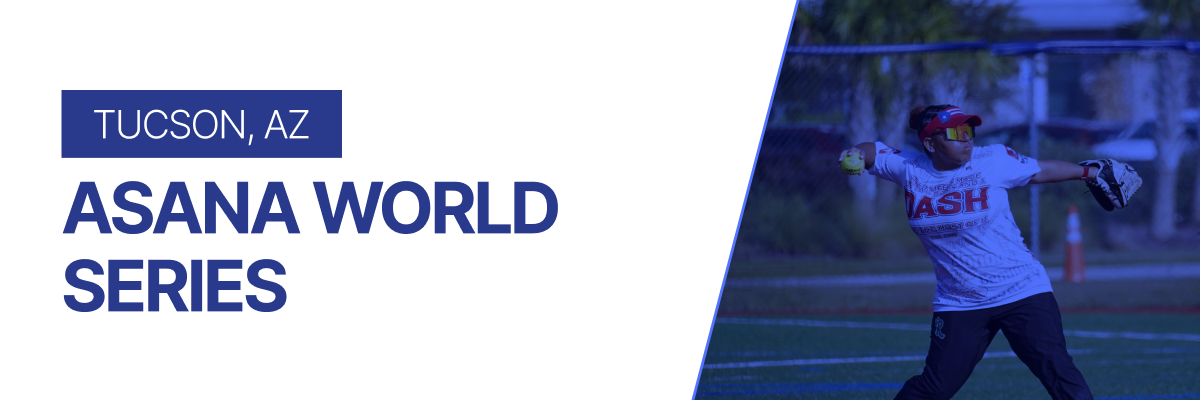
Tucson’s selection as host of ASANA, in partnership with Tucson Inferno Pride, reflects a destination strategy that extends beyond facilities and into civic culture. While many cities highlight inclusion during bid cycles, Tucson presents it as an ongoing community characteristic rather than an event-specific initiative.
The city’s reputation has been shaped by independent business ownership, creative communities, and neighborhood-based gathering spaces. Women- and queer-owned businesses operate across multiple corridors rather than within a single designated district. Social organizations and nonprofits provide community infrastructure that exists year-round. Municipal leadership also reflects demographic diversity, with the current council described as the most diverse in Tucson’s history.
In 2025, Tucson scored 100/100 on the Human Rights Campaign Foundation’s Municipal Equality Index, which evaluates how inclusive a city’s municipal laws, policies, and services are for LGBTQ residents and workers. That measurable policy framework adds structural reinforcement to the city’s community narrative.
As described by Bree Lopez, Visit Tucson's Sports Sales Manager:
"Tucson has long been a city built by and for misfits and people who refused to be “othered.” Our community thrives on unity through differences. In 2025 Tucson scored 100/100 on the Human Rights Campaign Foundation’s Municipal Equality Index... Through our partnership with Tucson Inferno Pride and ASANA, we are proud to support an event that highlights elite competition while creating a memorable experience for athletes, families, and spectators."
The throughline is clear: inclusion is positioned not as programming, but as environment.
Why Tucson Is Winning
For rights holders organizing women’s and LGBTQ+ events, host selection increasingly involves evaluating the broader setting — not just venue quality, but policy alignment, civic tone, and community readiness.
Tucson’s competitive advantage lies in demonstrable consistency. The Municipal Equality Index score provides external validation. The composition of city leadership reinforces representation in governance. Partnerships such as the one with Tucson Inferno Pride signal that collaboration extends beyond the sports sector.
Notably, Tucson does not rely on a centralized “gayborhood” model. Inclusive businesses and gathering spaces are distributed throughout the city. From a bid standpoint, that decentralization expands activation possibilities while reinforcing that welcome is not confined to a single district.
Activation Beyond the Venue
ASANA’s footprint is positioned to extend into local businesses, nonprofit spaces, and community venues. Women- and queer-owned establishments provide natural gathering points for hospitality events, meetups, and cultural programming.
This distributed activation model allows athletes and families to engage with the city more broadly, rather than remaining within a controlled event perimeter. From a strategic perspective, that integration supports comfort, visibility, and connection. Factors that can influence how rights holders evaluate host environments, particularly for communities that have not always felt equally represented in sport.
What Other Cities Can Learn
Tucson offers several practical insights for destinations pursuing similar events:
- Policy alignment strengthens competitive positioning.
- Community partnerships must exist before the bid — not emerge during it.
- Inclusion is more persuasive when it is embedded across neighborhoods and business sectors.
The Bigger Picture: Identity as Strategy
Greensboro, Buffalo, and Tucson operate at different scales. One hosts a women’s invitational with deep historical resonance. One hosts a globally televised professional draft. One hosts a women’s and LGBTQ+ championship rooted in community partnership.
Yet the pattern is consistent: Infrastructure enables hosting, alignment wins bids.
For destinations competing in today’s market, three strategic themes stand out:
- Identity is an asset. Cities that understand their own story can position it effectively.
- Community activation matters. Events are evaluated by how they integrate locally, not just how they perform on the court or ice.
- Support systems influence selection. Policies, partnerships, and cultural context increasingly shape decision-making.
For Compete’s audience these examples reinforce a core truth: sport thrives when communities see themselves reflected in it.
The evolution of sports tourism may not hinge solely on who can build the largest venue or offer the biggest incentive package. It may increasingly depend on who can demonstrate a genuine connection between sport and people. In that sense, the destinations hosting big right now are not just staging events. They are staging belonging.